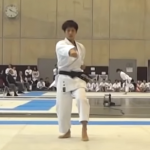
There are probably many people who say, “Karate is a well-known martial art, but I don’t really know much about it!”
As you all know, karate became an official sport starting with the 2020 Tokyo Olympics.
Don’t you think it’s a bit of a shame not to know about it, even though it’s a traditional Japanese martial art?
There are several strong gold medal contenders on the Japanese team.
You’ll definitely enjoy the Olympics more if you know a little about karate!
It’s true—with so many different styles and rules, if you’re not experienced, you’ll end up thinking, “I don’t get it!”
So, as someone with 23 years of karate experience, I’d like to carefully explain “karate styles” in a way that even beginners can understand.
By reading this article, you’ll learn everythingfrom the differences between karate styles to the ins and outs of Olympic karate —and gain a deep understanding of the true essence of karate!
Which karate style should I learn?
What kind of karate do we see on TV?
What are the rules of competition?
What exactly is karate?
You'll gain a deeper understanding of it, which will make practicing karate even more enjoyable.
What Is "Karate" in the First Place?
Karate is formally known as Karate-do,
and involves using fists, elbows, knees, and feet, primarily strikes .
The origins of karate lie in a Ryukyuan martial art called “Te” (Tee), which dates back to around the 15th century.
From there, the name evolved from “Tōde” → “Karate” → “Karate-dō.”
Today, karate is broadly divided into two main branches.
① "Traditional Karate" ...Carrying on traditional kata and kumite
② "Practical Karate" ...Derived from Traditional Karate
The Olympic discipline is "Traditional Karate."
This Traditional Karate is also divided into major styles.
There are different styles within “practical karate” as well.
However, in terms of philosophy,
Karate → Traditional karate or practical karate? → If it's traditional karate, which style is it, and,
When we say “karate styles,” we are referring specifically to “traditional karate styles.”
I will explain this traditional karate style, starting with the origins of karate.
The Roots of Karate
The Fusion of Ryukyuan Martial Arts and Chinese Martial Arts = Tōde (Karate)
Karate actually originated from “Te,” a martial art of what is now Okinawa, or the Ryukyu Islands.
It is said to have existed as early as around the year 1500 (the 16th century), though there are various theories on the matter.
It is said (though there are various theories) that “Tōde” (Tō-de), the origin of karate, emerged when this “Te” was fused with the martial arts that Kan’ga Sakugawa brought back from China in the early 1800s.
Around the time this “Tōde” became a physical education subject at Shuri Elementary School in Okinawa Prefecture in 1901 (Meiji 34), its name was changed to “Karate.”
Then, in 1922 (around Taishō 11), Master Gichin Funakoshi—who would later become the founder of the Shōtōkan-ryū style—and others began to formally introduce this form of Tōde to the mainland; Master Funakoshi later named it “Karate-dō” as a martial art.
The Origins of Each School (The Four Major Schools)
Karate, a martial art that primarily uses the hands and feet to deliver strikes.
The great masters of that era, as if captivated by the allure of the martial arts, devoted their lives to relentless training, adding their own unique twists to systematically refine and perfect these arts.
That eventually became established as a "school."
Currently, there are four major schools.
Gōjū-ryū, Shitō-ryū, Shōtōkan-ryū, and Wadō-ryū
(There are also countless other schools and sub-schools.)
The Appeal and Characteristics of Each Style
These are the founders of each style. Just knowing this makes you quite the connoisseur.
I feel that there are few students with this level of knowledge at karate dojos.
Even in the Master Class, it’s safe to say that the general perception is along the lines of, “Well, there are some people who remember it.”
When preparing for the black belt exam, you go through the material once, but...
Since this isn’t the kind of knowledge you recall every time you practice karate, quite a few people find their memory of it a bit fuzzy.
Now, let's take a look at the four major schools!
The characteristics of a style are reflected in its forms.
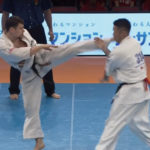
In Olympic kumite, which follows the “stop-short rule,” the characteristics of specific styles generally do not stand out prominently.
When watching kumite matches,
people often say things like, “Those footwork combinations look just like the style from XX High School,”
“As expected of XX University—their kumite is so grounded, they don’t back down an inch!” or
“The fighters from XX Dojo are really good at reading their opponents!”
However, no one thinks to themselves, “This is Shito-ryu kumite!” or “This is Goju-ryu kumite!”
Therefore, when it comes to the question of which style is the strongest,
the only answer that comes to mind is the cliché that it ultimately depends on the individual athlete's skill...
(That said, since the Shōtōkan-ryū style alone held matches within the school that were single-point bouts fought bare-handed without protective gear—matches that could easily result in serious injury if even a single mistake were made—I do sometimes get the impression that kumite under the All Japan Karate-do Federation (which follows rules nearly identical to those of the Olympics) is also quite intense.)
The differences between styles lie mainly in the forms.
The forms are condensed versions of each school’s techniques, distilled into standardized templates. That is precisely why the differences between the schools are so clearly evident.
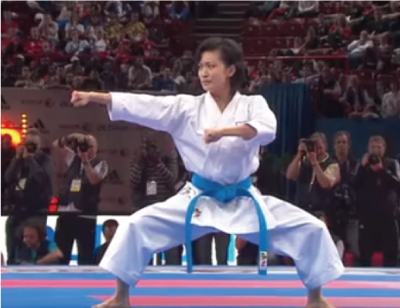
There is a competition focused on kata, and this is the cool karate that became a hot topic in TV commercials and promotional videos. Every style of karate has its own kata.
An Overview of the Four Major Schools
First, let's take a look at the Goju-ryu style.
Goju-ryu
There are two types of traditional karate.
① “Shurite”: Characterized by fast, linear movements
② “Nahate”: Characterized by slow, powerful movements with many curved motions and a tenacious style
Although this distinction is not evident in modern kumite, this type of kata—which possesses characteristics intermediate between Shuri-te and Naha-te—
is classified as Tomari-te.
The Goju-ryu is the most representative style of Naha-te.
Founder of the Goju-ryu Style
The founder of the school is Master Chojun Miyagi.
Born during the Meiji era, he began training under Master Higa Onna Kanryo, a master of Naha-te, and also devoted himself to the practice of Chinese martial arts, thoroughly studying both the techniques and the underlying theory.
Characteristics of the Goju-ryu Style
A distinctive feature of the Goju-ryu style is its footwork, which incorporates the rowing posture of ethnic groups in southern China.
Because southern China has many rivers, boats were a popular means of transportation.
Therefore, the people of the South were accustomed to living on boats, where their footing was always unstable.
When Master Miyagi traveled to China to study Chinese martial arts, he noticed that the people of this southern region rarely lifted the soles of their feet off the ground as they moved; instead, they seemed to propel themselves forward by pushing off the floor with their feet.
This way of standing and moving, as if the feet were firmly rooted to the bottom of a boat.
Taking inspiration from this,
it is said that this stance gave rise to the “Sanchin-dachi” stance.
This stance and these movements are extremely difficult!
Unless you’re a true genius or someone who practices karate around the clock,
you won’t be able to do it in just a year or two.
It took me
four to five years to get to a decent level .
A key feature of this training method is the circular movement created by “hooking” the opponent’s attacking arm to entangle it.
This allows you to control the opponent’s movement, deflect their attack while minimizing the impact, and transition into a counterattack from within their motion.
The goal is to use this to confuse and manipulate the opponent, and ultimately to control their consciousness.
"Controlling one's consciousness? Like that's even possible."
Some of you may be thinking that.
However, when your attacks are skillfully parried by your opponent and you find yourself at their mercy, you enter a mental state where it feels as if even your own consciousness is in their hands, and it becomes a struggle just to maintain your fighting spirit.
In technical terms, "applying and releasing force" , “reverse utilization of force” , “perceiving the flow of ki” .
The philosophy of Goju-ryu is as follows:
・All phenomena consist of “Go” and “Ju.”
・Go represents offense, and Ju represents defense.
・The unification of Go and Ju leads to a state of mind free from ego, which avoids conflict.
These are our goals.
Martial arts are only possible through mental discipline
As a lesson from Founder Miyagi:
“Do not strike others, nor be struck by others; seek to avoid conflict.”
This philosophy of safety encapsulates the ideals of the Goju-ryu style.
What a wonderful philosophy—one that aims not to defeat or harm the opponent, but to avoid and resolve conflict!
Shito-ryu
Shito-ryu is a style of karate that incorporates both Shuri-te and Naha-te.
Furthermore, it is characterized as a comprehensive martial art thatincorporates techniques from Ryukyu’s traditional martial arts, such as bojutsu (staff techniques) and saijutsu (sword techniques).
Founder of the Shito-ryu Style
The founder, Master Kenwa Mabuni, studied the Itosu-ryu style under Master Ankō Itosu, a master of Shuri-te karate.
Then, through an introduction by Master Chojun Miyagi—who would later become the founder of Goju-ryu—I studied the Higaonna style under Master Kanryo Higaonna, a master of Naha-te.
Master Mabuni also incorporates various other forms of karate and martial arts.
Even after graduating from junior high school and becoming a police officer, he continued to explore kata and techniques other than Shuri-te and Naha-te.
He trained in various karate styles, including the Matsumura and Aragaki schools.
In addition to karate, there are the Ryukyu traditional martial arts of bojutsu (staff techniques) and saijutsu (sword techniques).
Shito-ryu Karate-do is the result of the fusion and harmonization of all these techniques and spiritual principles.
As you can see, the name “Shito-ryu” is derived from the initials of Masters Itosu and Higashionna.
Characteristics of Shito-ryu
In terms of technique, it is a comprehensive martial art that includes not only strikes and kicks but also throws and joint locks.
Furthermore, as exemplified by the phrase “Shu-Ha-Ri” (which describes the master-disciple relationship in martial arts, the tea ceremony, and other disciplines—first adhering faithfully to the basics, then analyzing, refining, and applying them, and finally breaking away from them to reach a new level of mastery),
Master the fundamentals of form → Apply them to kumite → And master even the deepest secrets of the art.
This process has been systematized, and instruction is based on it.
The Shito-ryu style is, above all, a wide variety of techniques , so
there are an incredible number of kata.
After years of repetitive practice, no matter how many kata there are, your body just remembers them on its own, but...
There are also forms for staff techniques and hairpin techniques (saijutsu).
This is the Shito-ryu form, “Chatan Yaraku Sankū.”
It’s long, and it’s really tiring for the performer, but it’s a very impressive form.
"Chatan" by Rika Usami, the beautiful karateka.
↓
One of the defining characteristics of Shuri-te is its speed.
As an aside, I personally find the audience applause during the double-kick sequence a bit distracting.
It’s something unique to international tournaments, but the rhythmic, electrifying atmosphere kind of throws me off my game...
Mental Training: The Fist of the Noble Man
Rather than the technical aspects of karate, its essence lies in mental discipline.
The founder, Master Mabuni Kenwa, advocated the "Fist of the Gentleman" (Kunshi no Ken) and provided guidance aimed at "the development and improvement of a well-rounded character."
Here, too, we can see the spirit of a “harmonious character”—that is, one who does not choose conflict but aims to avoid and resolve it—which is a wonderful ideal for the human way of life.
Shōtōkan-ryū
Founder of the Shōtōkan-ryū Style
The founder of the Shōtōkan-ryū style is Master Gichin Funakoshi.
He is said to be .
The name of the school was not chosen by the master himself.
Since Master Funakoshi, who was also a calligrapher, used the artistic name “Shōtō,” and because this name conveys the meaning of being as dignified as a pine tree and as powerful as a raging wave, the school later came to be known as the “Shōtō-kan” school.
It was Master Funakoshi whorenamed “Karate” to “Karate” and also changed “Karate-jutsu” to “Karate-do.”
Characteristics of the Shōtōkan Style
The traditional practice of the Shōtōkan-ryū style is to place great emphasis on “kata” training, in accordance with Master Funakoshi’s final teachings: “Be faithful to the kata; there are no matches in karate.”
Even in the pure Shoto-kan style, we practice kumite while respecting our opponent. However, this is not a contest.
It is a way to verify whether the defensive and offensive techniques used in kata have been trained to the point where they can be effectively applied in real situations.
Shōtōkan-ryū Karate is a martial art that anyone can start at any time, regardless of age, gender, personality, or physical build. It is designed to be practiced without strain, and places equal emphasis on physical fitness as well as martial arts training.
Shoto-kan has a dynamic design!
When viewed in the context of the Shōtōkan-ryū form, each technique is extremely dynamic !
The lunges during attacks are also much larger compared to other schools, making them incredibly powerful!
Thud!!! on the floor There are also moves where they stomp like that.
The movements are huge!
If you perform such a large movement in a kata competition of another style, you’ll lose points (though this depends on the style...).
The Shoto-kan-ryu kata is, to put it simply, truly awe-inspiring.
It is said that the reason this technique became so dynamic is that it was designed with the scenario in mind where a smaller person would face off against a larger opponent.
So, since your opponent is considerably larger than you, your defensive movements and lunges naturally become more exaggerated, right?
This is the group kata "Unsu" from Shoto-kan.
So powerful!!
The "decomposition kumite" demonstration that followed the kata was also fantastic!
Bukai Kumite recreates the scenarios embodied in the kata:
"When an opponent attacks from here like this, I’ll defend like this and counterattack like this"
It’s world-class quality!!
Mental Preparation
The Shōtōkan-ryū school also does not believe that training in techniques alone is sufficient.
Master Funakoshi completed the “Twenty Precepts of Karate-do, ” which include the principle that “there is no first move in karate, ” and
presented them as guidelines for those studying karate-do and as life lessons for karate practitioners.
The Shōtōkan-ryū defines karate-do as
"not only a path to spiritual cultivation, but also a form of physical education, a method for maintaining health, and a self-defense art that anyone can practice and continue for a long time, even without physical strength. "
Wadō-ryū
Founder of the Wadō-ryū School
The founder of the Wadō-ryū style is Master Hiroki Otsuka.
Wadoryu is a style of karate that originated in Okinawa and was adapted to fit Japanese martial arts traditions, a Japanese adaptation of karate .
Master Otsuka studied under numerous masters and founders of various schools, and through this, he perfected the Wadō-ryū.
First,
He received instruction from a former martial arts instructor of the Tsuchiura Domain,
and studied under Master Tatsuzaburō Yukiyoshi Nakayama, the third-generation head of Shintō Yōshin-ryū Jujutsu (achieving full mastery), and succeeded him as the fourth-generation head of Shintō Yōshin-ryū.
He also studied karate under the guidance of Master Yoshichika Funakoshi of the Shōtōkan-ryū style (
),
and through technical exchanges with Master Asaki Honbu of Nihon Denshū Heihō Honbu Kenpō and Master Kenwa Mabuni of the Shitō-ryū style.
Not only that, but
we also incorporated elements of swordsmanship and jujutsu, such as the body movements used in the Yagyu Shinkage-ryu and Tomita-ryu kodachi styles.
He seems to have been quite the martial arts scholar...
I wonder just how passionate he was about martial arts research...
The culmination of all this is Wadoryu Karate.
Characteristics of the Wadō-ryū Style
As mentioned above, the Wadoryu style incorporates all forms of Japanese martial arts — including swordsmanship, jujutsu, and other Japanese martial arts into karate and is therefore considered a “Japanese-style” form of karate.
The techniques in Wadoryu kata are more similar to those of Shōtōkan-ryū than to those of Gojūryū or Shitōryū.
At tournaments (such as the All-Japan Karate-do Federation Championships) where all four major styles and others come together and are held under the same rules as the Olympics, I get the impression that it’s relatively rare to see Wadoryu kata.
In addition, since it incorporates jiu-jitsu, it features a wide variety of throws and leg techniques.
Furthermore, perhaps as a result of his study of all kinds of martial arts, including swordsmanship, his movements seem refined and free of unnecessary motions.
The Essence of the Wadō-ryū
A poem by Master Otsuka, the founder of the style: “Do not think the Way of Martial Arts is merely about violence; rather, pursue the Way of Harmony and seek harmony.”
The Wadō-ryū style is based on the principles of “respect, love, and courtesy (rei),” and its goal is to seek “harmony,” which is more difficult to achieve than conflict.
It’s often said that seeking harmony is more difficult than fighting and defeating an opponent.
The essence lies not in defeating one’s opponent, but in pursuing the path of harmony.
Which style should I choose?
The way karate is practiced varies greatly from one dojo to another.
Which school you choose depends on
depends on what you want to do.
90% of the practice is kumite! There are dojos like that, and
90% is kata!
This isn’t a difference in styles, but a difference in dojo policies.
I want to get in shape!
When choosing a style, the one factor that definitely makes a difference is “which kata you perform.”
So, try looking it up in a video:
"I want to practice Shito-ryu kata!"
If that sounds like something you'd be interested in, please contact Shito-ryu.
If you do, you're sure to be taught the Shito-ryu kata.
It’s hard to say exactly which dojo you should choose without actually visiting it yourself, though...
"I love kumite!"
I'm not interested in the form, so
"Just let's spar!"
If that sounds like you, the best thing to do is visit a nearby dojo, watch a practice session, and see if they’re holding kumite drills.
If you look at it, you can get a general idea of the ratio between kata and kumite.
You'll know right away if the atmosphere suits you and if it has what you're looking for!
I want to compete in national-level kata and kumite!
Whether it's kata or kumite,
"I want to give it my all and aim for the national championships!"
If that sounds like you,
It might also be a good idea to reach out to the dojos of the top performers in the prefectural tournaments listed in the competition records on each style’s official website.
Reference sites below:
Gōjūkai↓
https://www.karatedo.co.jp/gojukai/
Shito-kai↓
http://www.karatedo.co.jp/shitokai/
Japan Karate Association (Shōtōkan-ryū) ↓
https://www.jka.or.jp/local/
Wadokai↓
http://www.karatedo.co.jp/wado/
The Spirit of Karate-do
Under Master Funakoshi, "karate" was renamed "karatedo."
Not martial arts as a combat technique, but "Budo"—a way of life centered on the theme of combat—
In other words, the true purpose is not to pursue the ultimate efficiency of attack and defense.
It is merely a means to an end—the ultimate goal being to resolve the dispute.
As we have seen, any form of karate—as long as it is “Karate-do”—embodies the ideals of the human way that we should strive to pursue.
Even if one devotes oneself solely to becoming stronger than others, neglecting the discipline of the mind and spirit can lead to violence.
This is the spirit and mindset necessary to live a meaningful life, even in today’s society, where there is less need for hand-to-hand combat or other situations in which karate would be directly useful.
Allowing an immature first-grader to carry a Japanese sword does more harm than good.
Similarly, if the heart and spirit worthy of mastering the techniques of combat are not honed alongside those techniques, the very raison d'être of karate as a martial art is virtually nonexistent.
We practice karate as a tool for learning the way of humanity and living our lives with integrity.
Through diligence, unwavering effort, and respect for our opponents, we cultivate humility—never forgetting to bow in respect, whether we win or lose.
It is our belief that only such individuals are truly worthy of pursuing the art of karate.
Karate is not meant to injure or defeat an opponent.
"Kata," which incorporate the fundamentals of karate as a template, always begin with a defensive stance.
"There is no first strike in karate."
Striking first is an act that provokes a conflict.
This is because the premise is that you do not actively harm your opponent, but rather, after being attacked,
you fight your opponent to defend yourself.
The Future of Karate
Karate, now an Olympic sport, is likely to continue to grow in the future.
However, if we were to turn this into a sport where attacking and defending are merely tools for scoring points,
it would be far too dull and a real waste.
After all, in every aspect of competitive karate, it’s commonplace to see elements that have no direct bearing on the superiority or inferiority of a technique,
Why have things like “etiquette” and “the prohibition of victory poses and provocative behavior” been codified as rules?
I believe that only by understanding the spirit behind these rules can one truly walk the “Way” of karate.
Thank you so much for reading this far!
Please take a look at karate—even if it’s just through a video—and listen to the sounds of it!
And if you ever feel like giving it a try, be sure to stop by a dojo near you!
Just like me, you might find yourself surrounded by friends who are like family, all united by the spirit of martial arts!